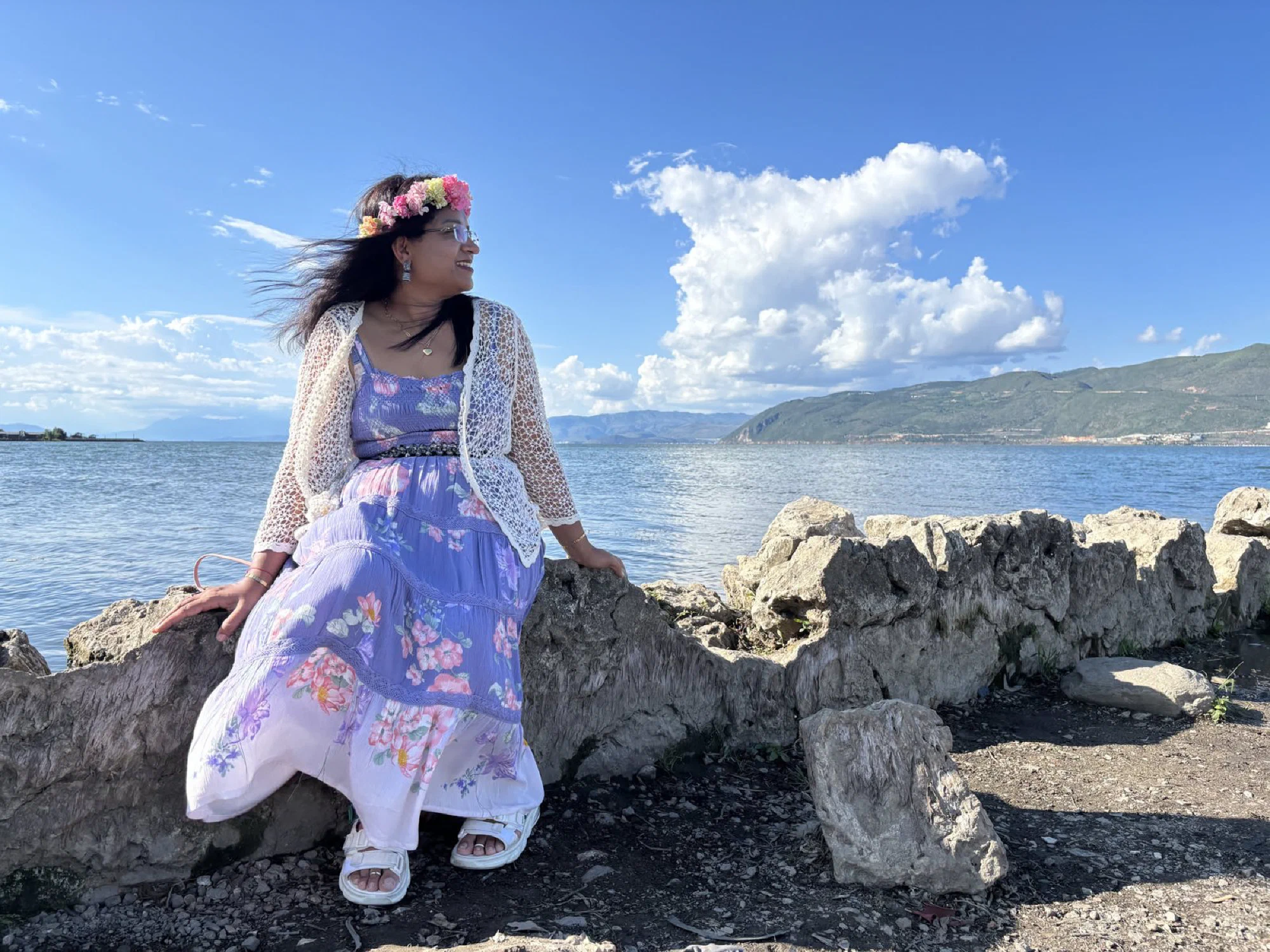
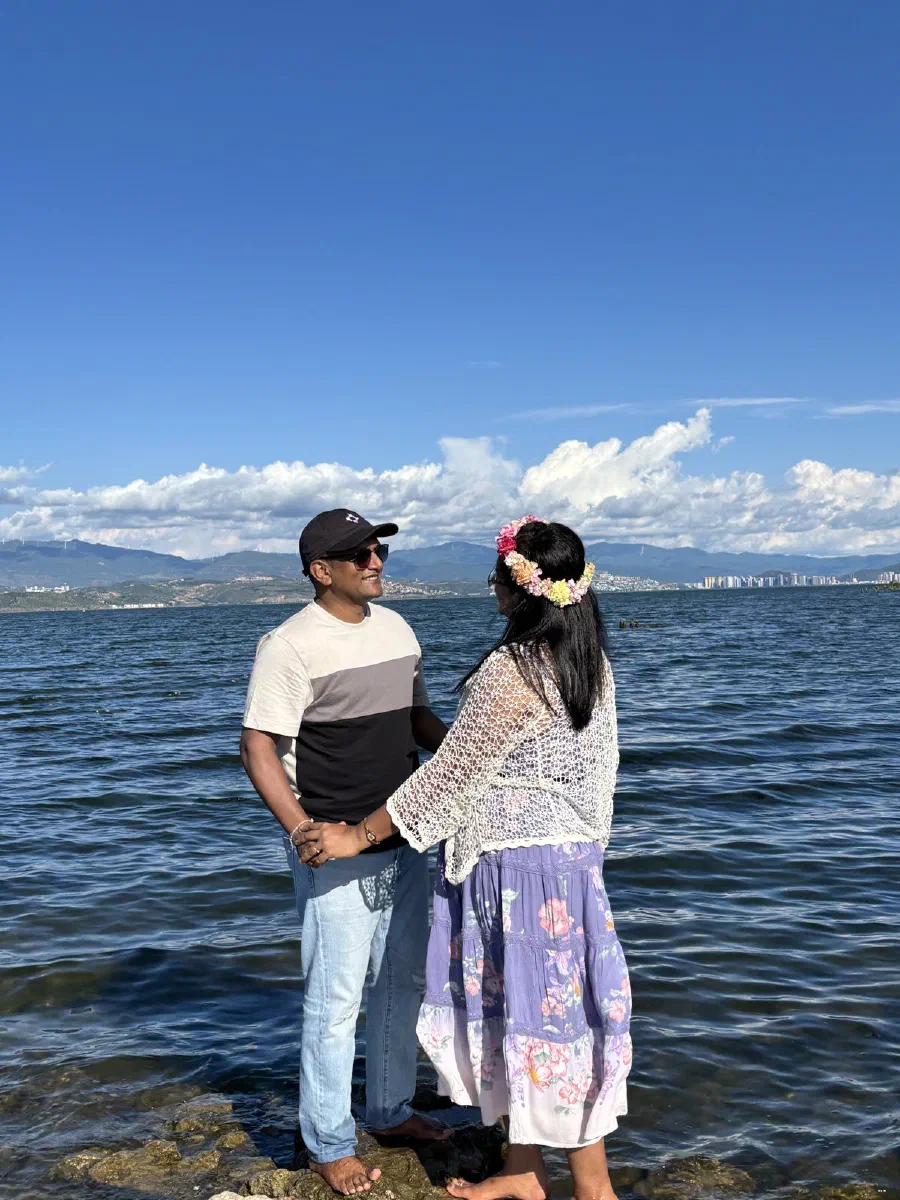
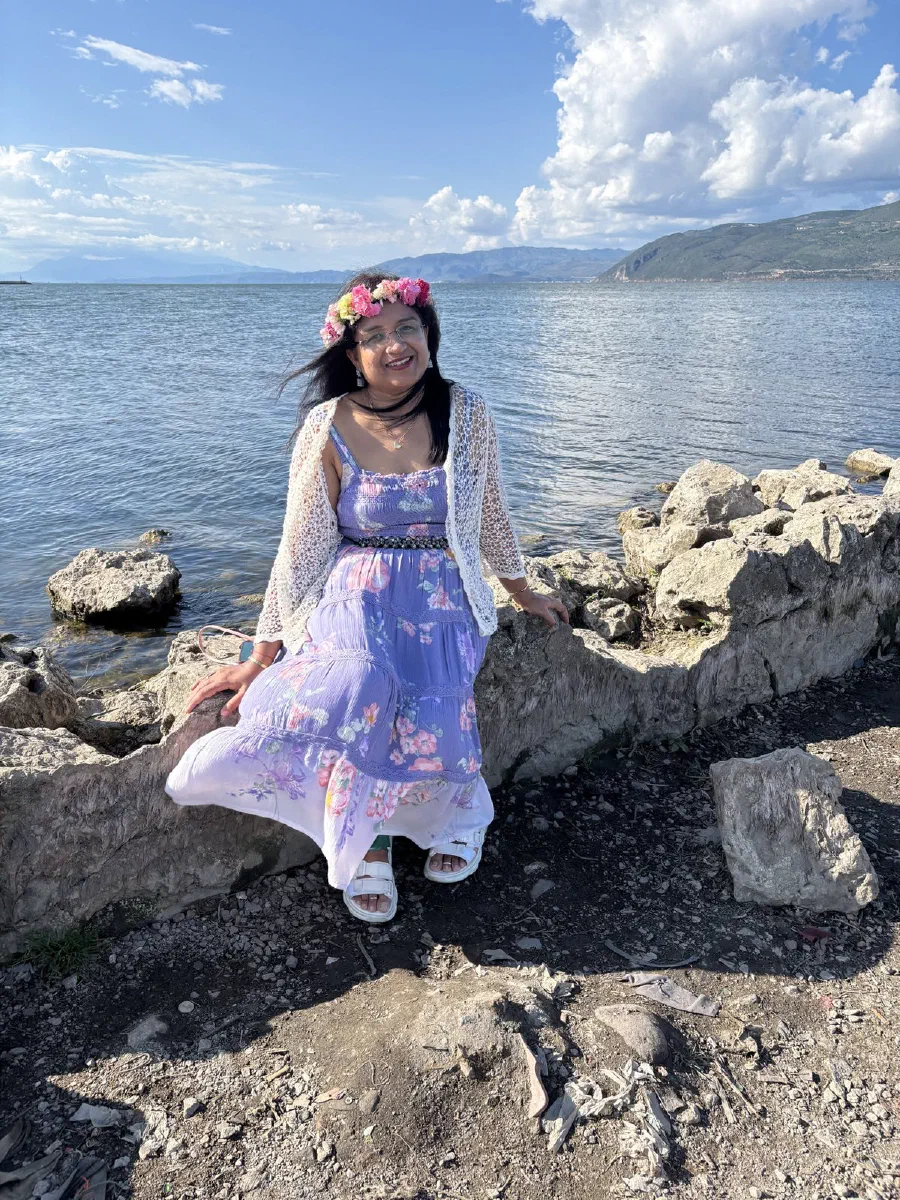
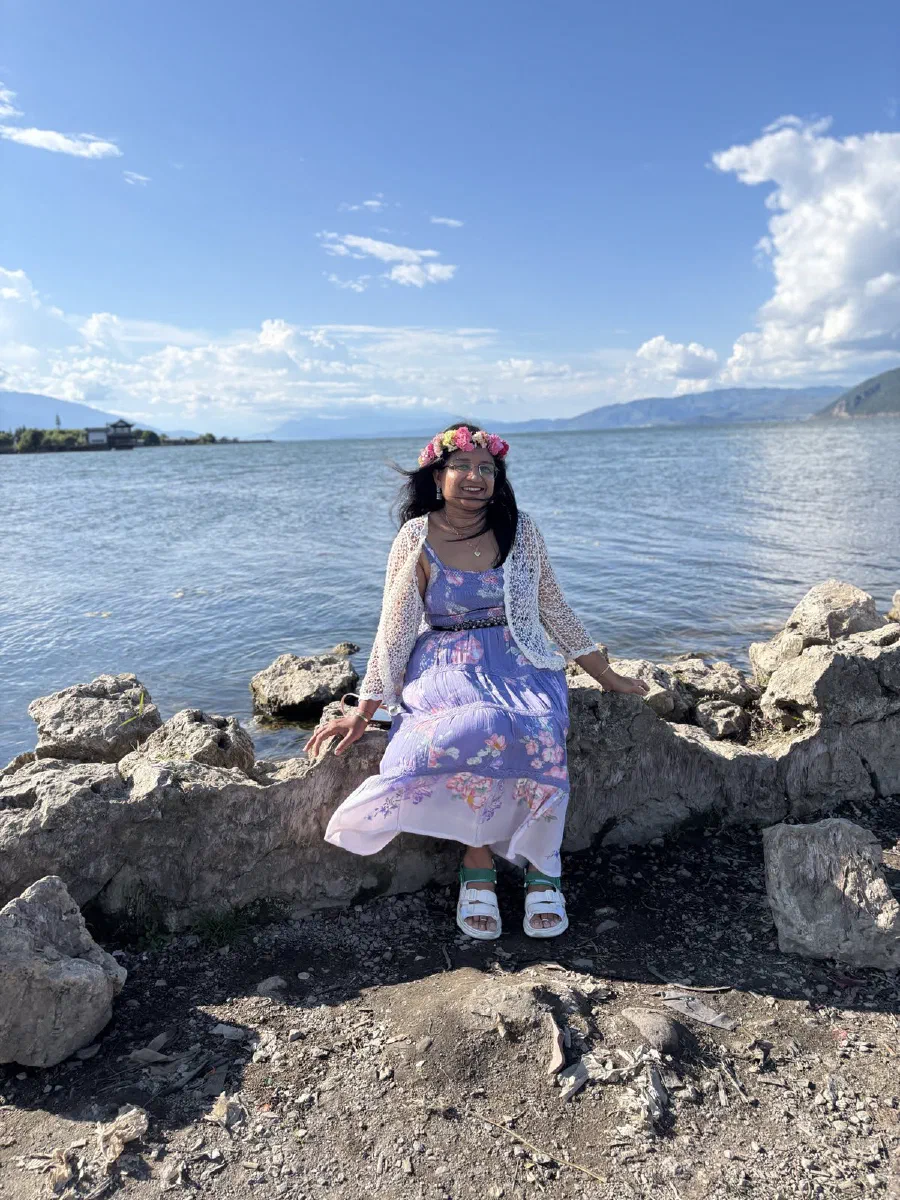
The lake held its breath at first light. Frost settled on the shore, and there she was — seated at the edge of Erhai, in our tenth-anniversary photograph. A small figure inside a vast silver morning, unfazed by the chill.
We had travelled a decade to reach this shore.
Ten years ago I married my wife, moved to a country I had never lived in, and started learning what it means to build something that outlasts a mood. Standing beside a lake that has been here since before the Jin dynasty, I realised something I already knew: none of those ten years were a deviation. Every one of them was a road we both chose.
So we went to Dali — a valley folded between grey mountain walls, reachable by high-speed rail, guarded by a lake that measures time differently than we do.
Departure: Kunming, by first light
The high-speed train leaves Kunming without ceremony. A hum of platform lights, a boarding announcement in Mandarin, and a long white nose gliding in, silent. Two minutes to board. We settled into twin seats, the window at our side, as the city’s rooftops flattened and turned to distant hills, terraced valleys the colour of old jade.
My anniversary gift was the seat beside me.
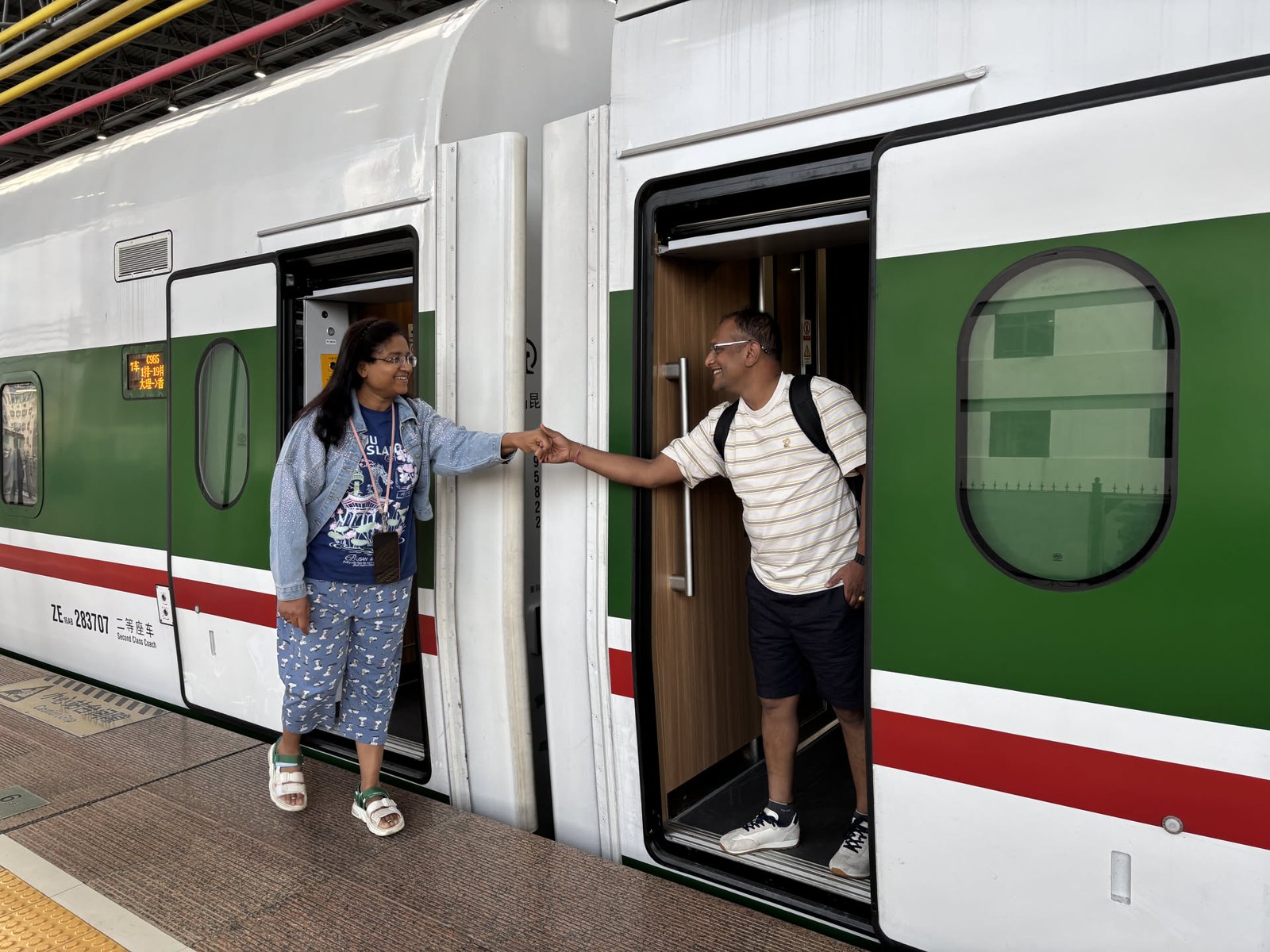
An hour and a half later we stepped onto the platform at Dali. A whole decade compressed into a single stretch of mountain-and-rice-terrace scenery, watched through glass. We stopped just long enough to feel lucky. Like everything.
Arrival: a platform by the mountains
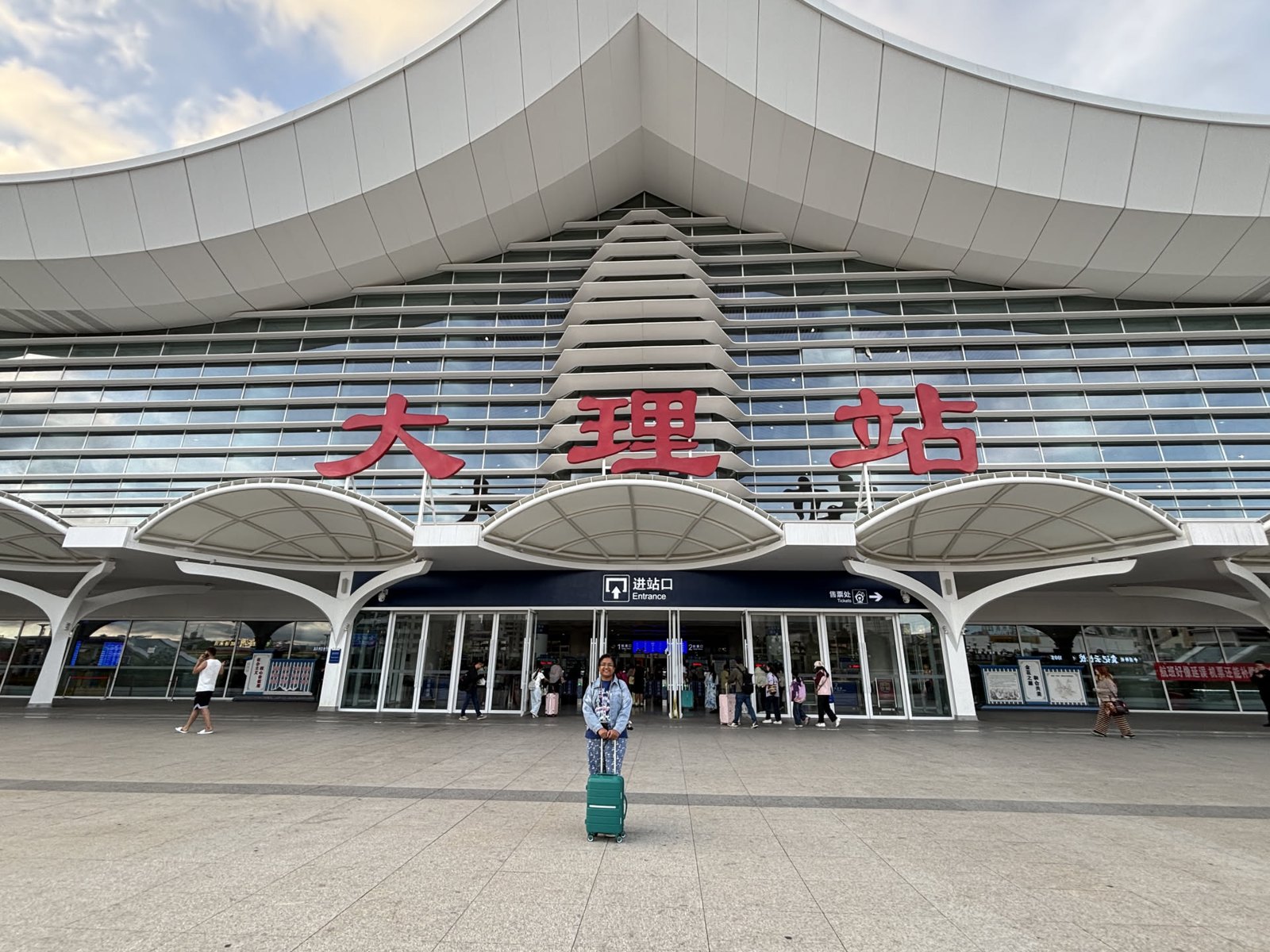
Dali’s station is functional — platform, corridor, blue exit signs in two languages. Nothing to write home about.
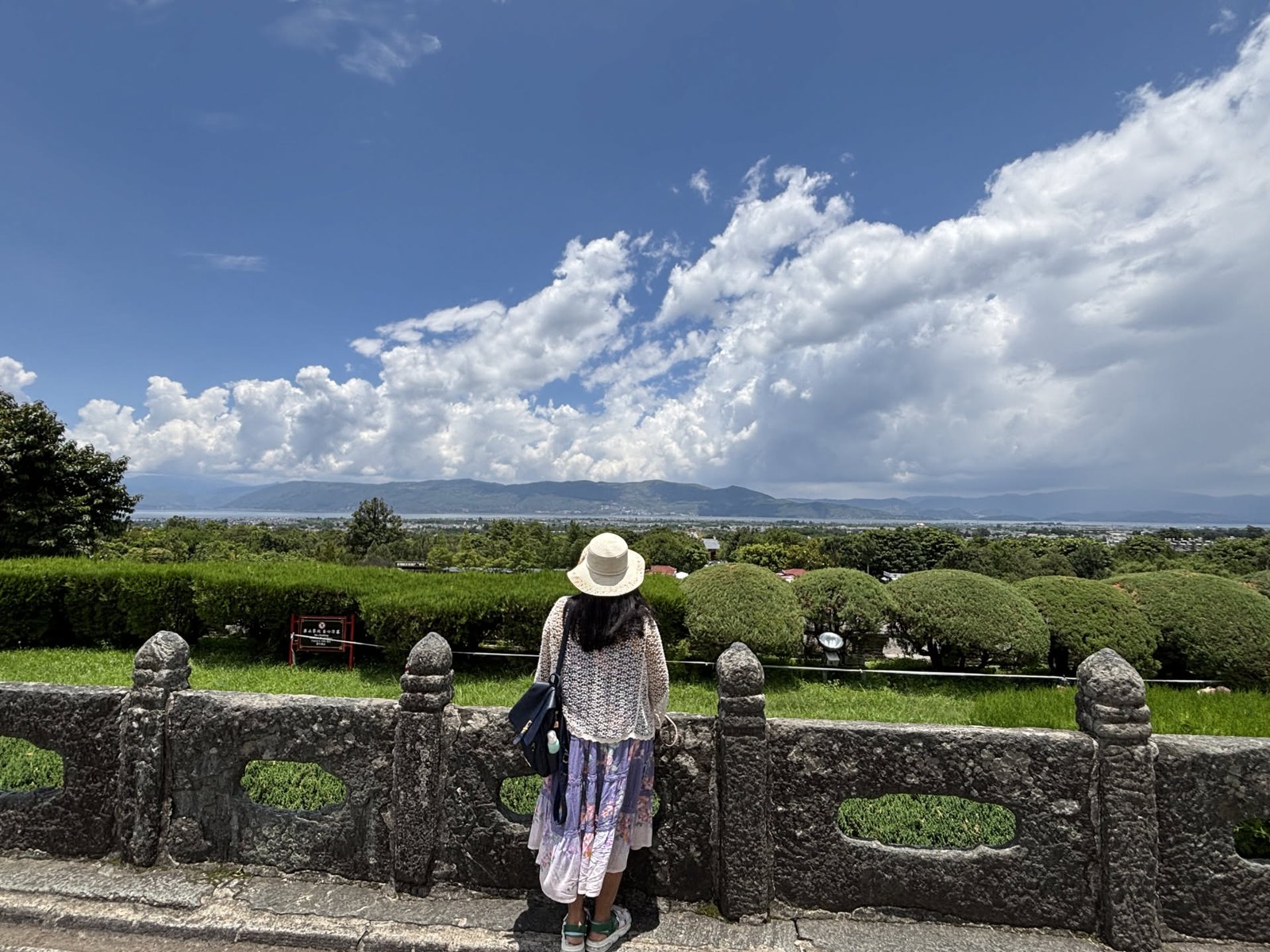
But step outside, and the town leans on you gently. To the west, the grey-blue ridge of the Cangshan mountains breaking through the morning. To the east, the cold, quiet shimmer of Erhai Lake.
Dali is known for its “four sceneries”: the wind of Xiaguan, the flowers of Shangguan, the snow on Cangshan, and the moon over Erhai. I remember reading about them before we left — the Bai people say their headdress reflects these very elements, the white top like Cangshan’s snow and the curving shape like Erhai’s crescent moon.
Standing there, the description made sense. The whole valley seemed built around the patient rhythm of these elements.
This was where we decided to mark the tenth year. A valley of mountains, lake, and low-hanging cloud. The town has stood here in some form for over a thousand years, and its whole posture is an argument for slowness: be generous, leave something for tomorrow.
That’s what a decade with you has felt like. A patient accumulation of mornings.
The shore of Erhai
Erhai — “sea of ears” — is a lake so long and wide it performs the old ocean trick of making mountains look like islands. It’s the second largest freshwater lake in Yunnan, stretching about 42 kilometres from north to south.
We walked to the shore as the morning light turned the water to hammered tin. Birds carved small punctuation on the surface. Fishermen stood by shallow boats — the Bai people have fished these waters for generations, some still using cormorants with rings around their necks. But here, at this early hour, they were simply doing nothing, in the proud, unhurried way of people who have known the water all their lives.
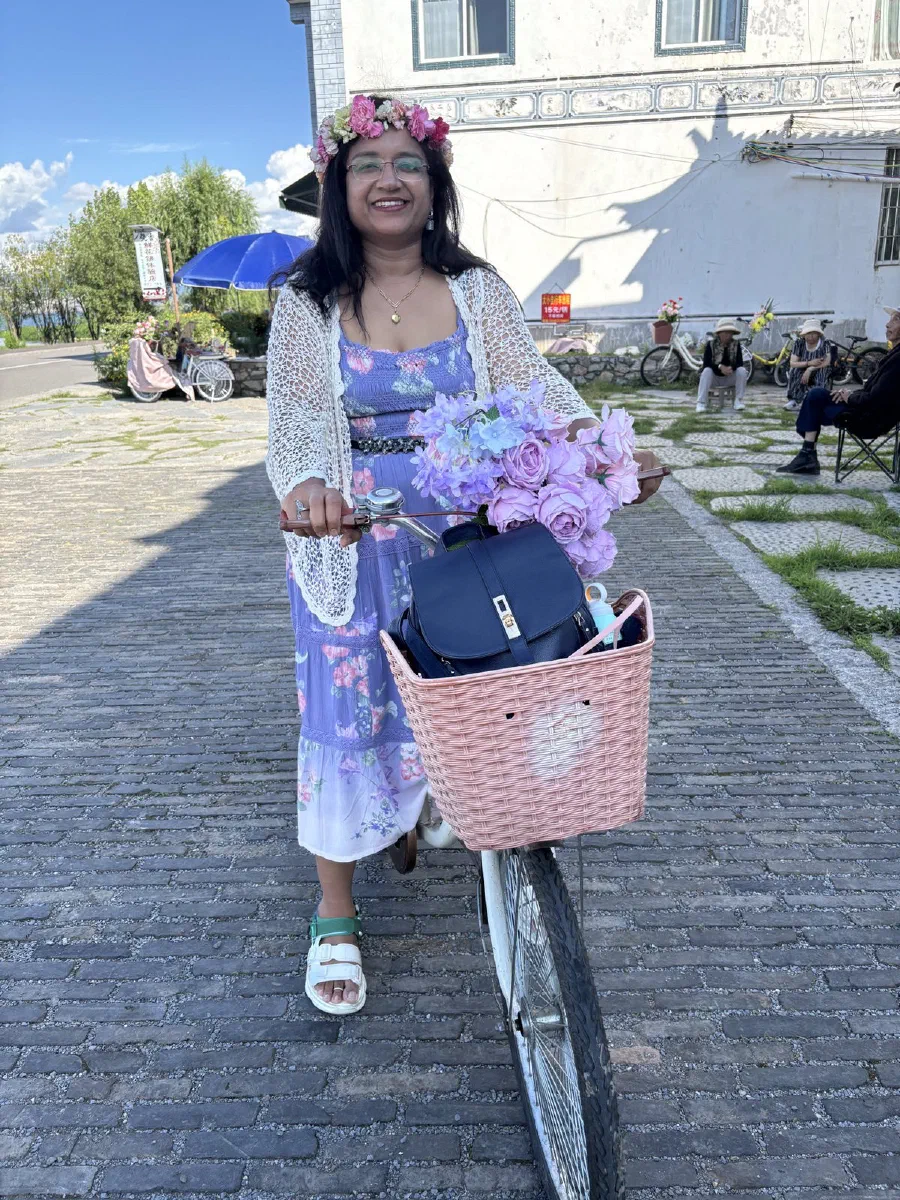
I rented a shared bicycle from Caicun and rode along the 115-kilometre ecological corridor. On the left, Erhai shimmered, sunlight just crossing over Cangshan, scattering bits of gold on the water. On the right, Bai houses with white walls and dark grey tiles, purple-red bougainvillea spilling over the walls. An auntie sunning quilts at her door. Life soft and real.
The moon over Erhai is famous — the Ming dynasty poet Feng Shike once wrote that the moon over Erhai is “exceptionally bright… in the water, the moon is as round as a circle, and the sky is bright and as clear as if just out of the bath.” We didn’t stay for the moon, but I could imagine it — that silver reflection stretching across the water, making the lake look like a mirror holding the sky.
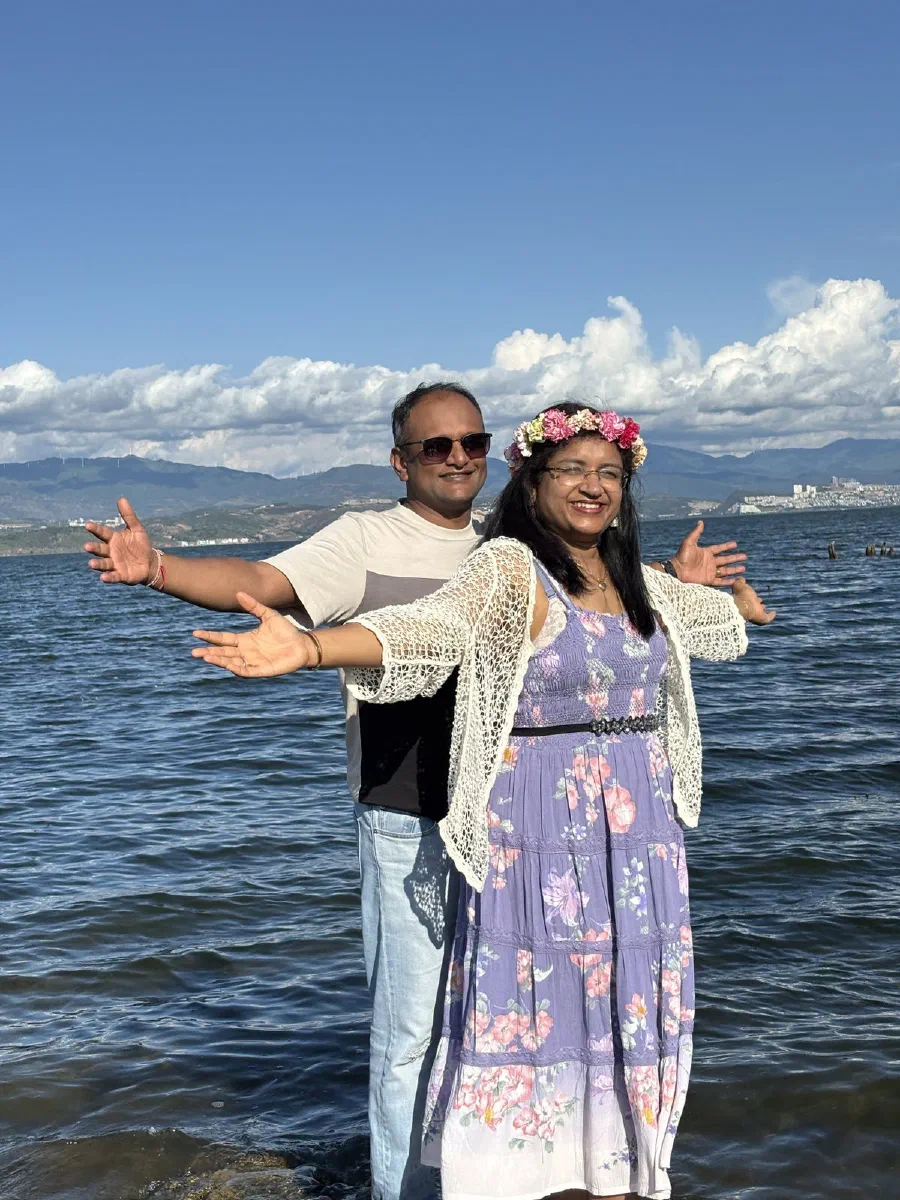
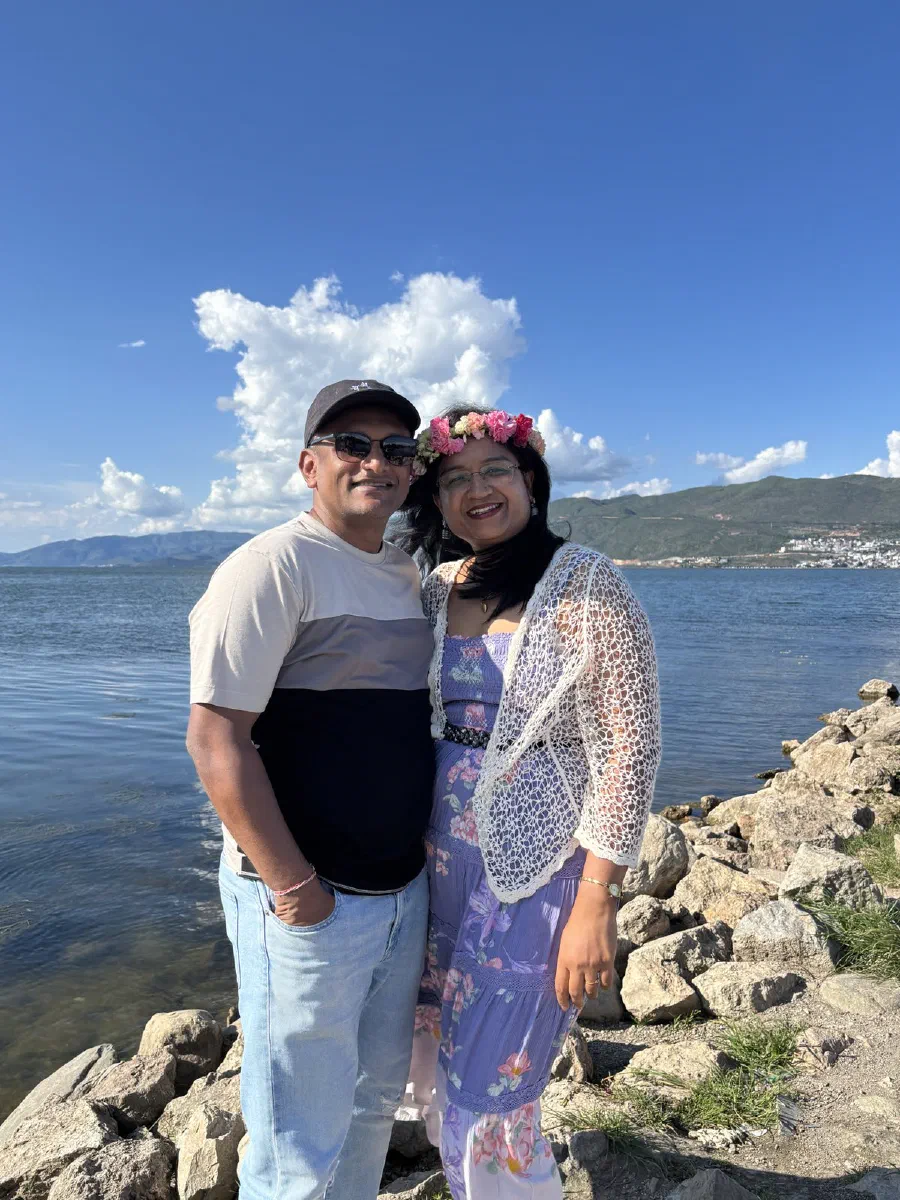
Standing on the bank beside the woman I married, in the flat silver light of early morning, I understood something I already knew — the best years are the quiet ones. They don’t arrive with fanfare. They just accumulate quietly, until one morning they are ten.
The Three Pagodas
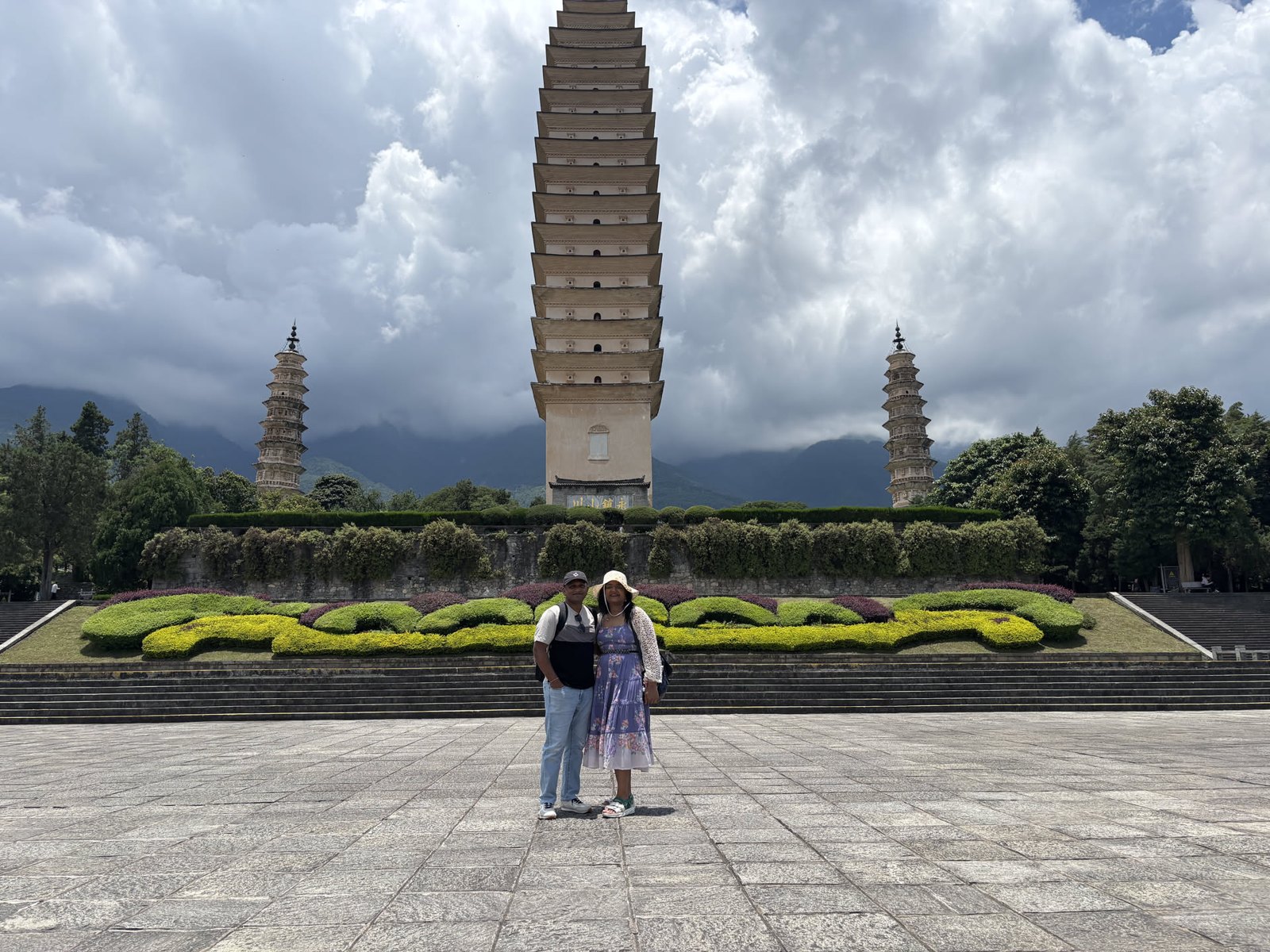
We found the Three Pagodas an easy walk from the shore. There they were, three slender towers standing shoulder to shoulder beneath the Cangshan peaks, built during the Tang dynasty. The grand Qianxun Pagoda rises nearly 70 metres, one of the tallest pagodas in the history of China, with sixteen stories and upturned roof edges.
It was originally part of Chongsheng Temple, the imperial temple of the Nanzhao and Dali Kingdoms — the very place where nine Dali kings came to become monks after they gave up their thrones.
Nine kings. Can you imagine? Men who had held the power of a kingdom, choosing peace and a quiet side within this valley. There’s something about that fact — it made me look at the pagodas differently. They’ve watched not just centuries pass, but rulers choose peace.
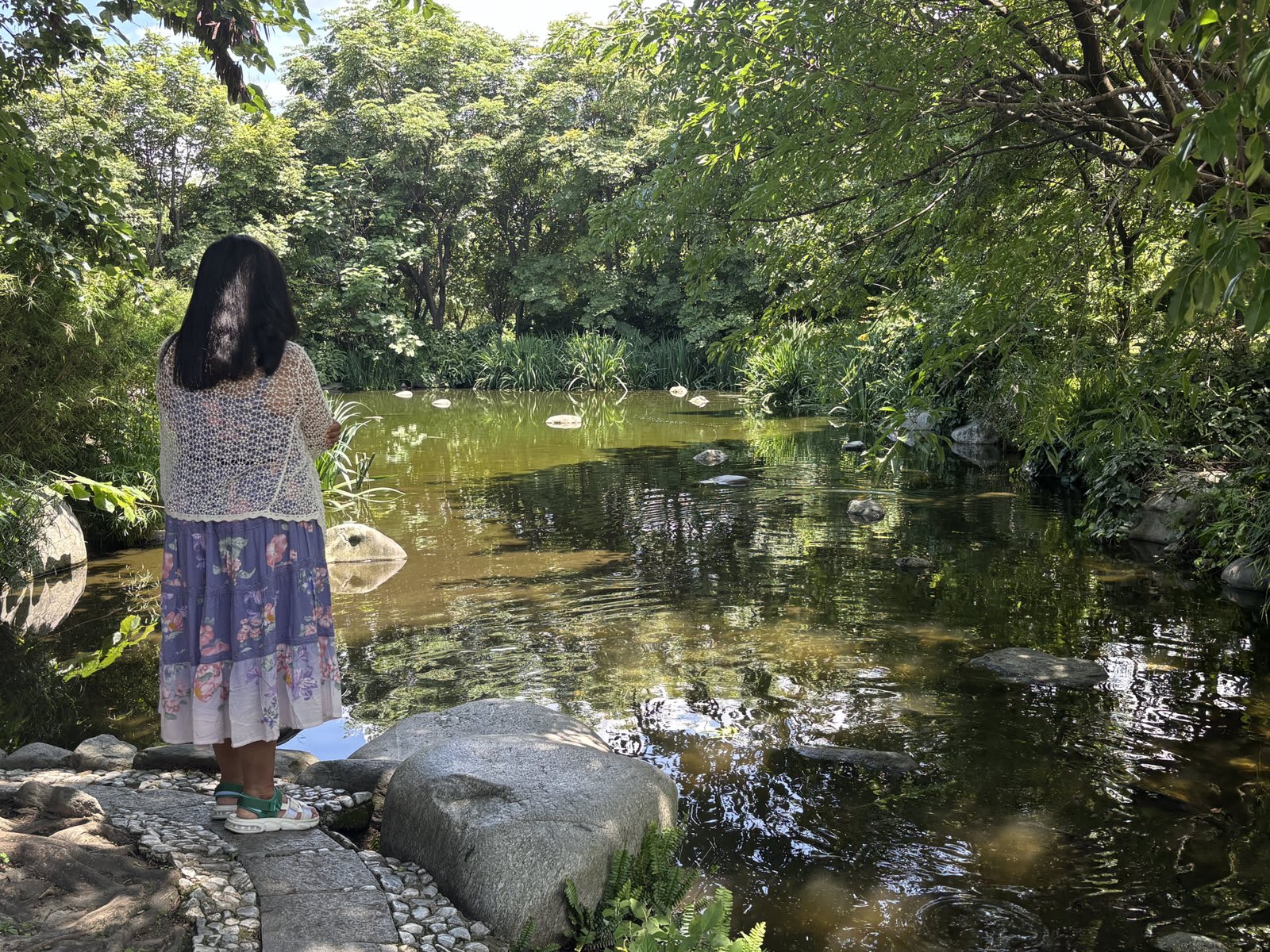
Close to the small pond nearby — the reflection pond — you stopped to watch the water, the towers standing upside-down. I watched you watching it. This is what most of our ten years looked like, really, from my side: you, quietly delighted, and me, grateful to be standing where I can see it.
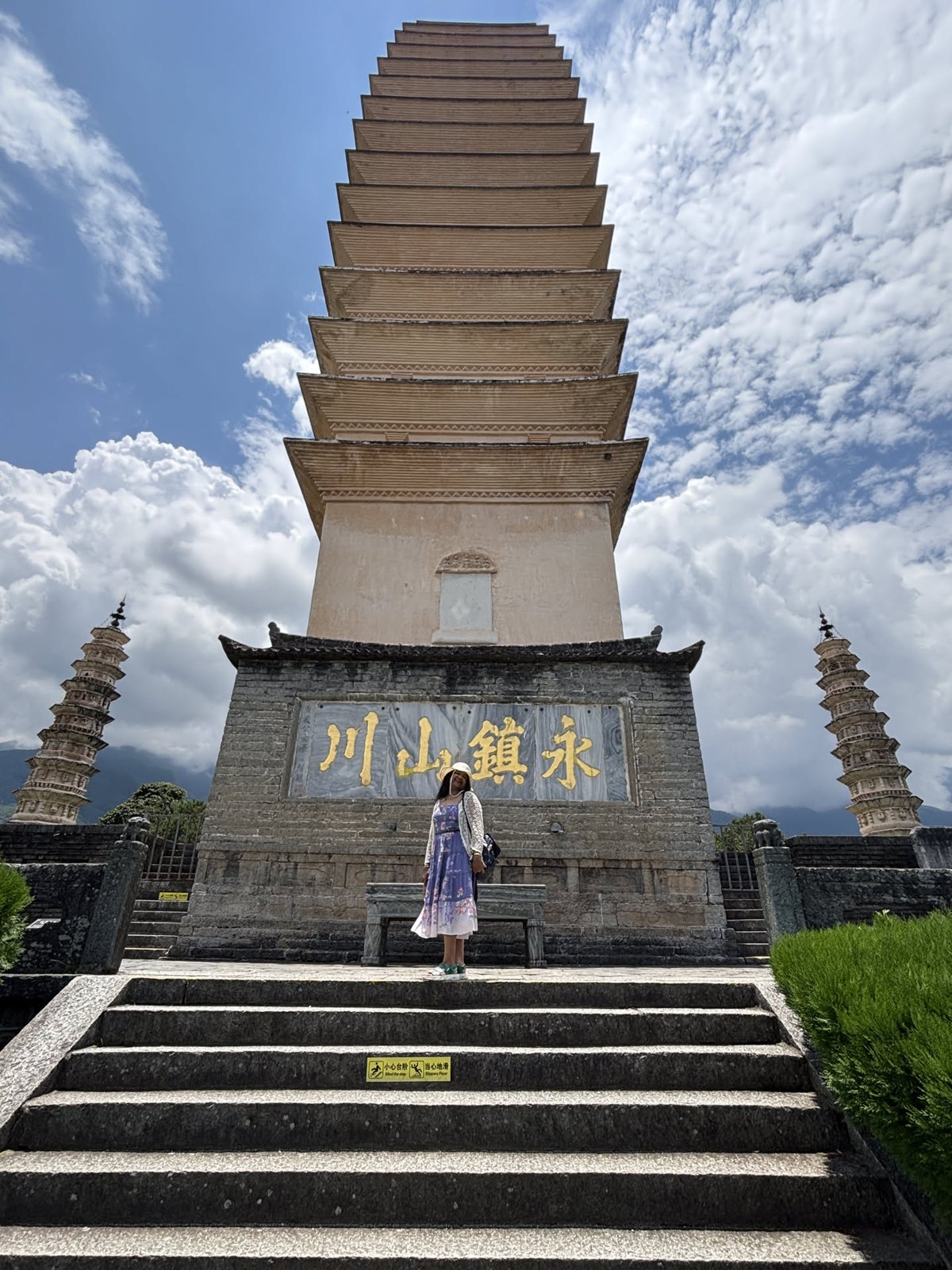
In 1978, during a restoration, archaeologists found more than 700 artefacts inside the hollow body of the Qianxun Pagoda — gold and silver statues, crystal figurines, ancient manuscripts. That old tower had been quietly holding its treasures, waiting for someone to find them.
The temple that once stood beside them was destroyed by fire centuries ago and has since been rebuilt; but the pagodas themselves have never fallen. Only repaired, tended, century after century — a little the way a marriage has to be.
We stood in that same frame and let the shutter click, and I remember thinking — this is what ten years looks like, when you’re lucky enough to be standing inside it.
The Old Town
When all of Dali’s longer stories had been told — the lake, the towers — we let the town itself have its say.
Dali’s old town, built during the Ming dynasty under Emperor Hongwu around 1382, is the kind of place that doesn’t announce itself. You turn a corner and there it is: grey cobblestone streets, wooden facades darkened by decades of sun, courtyards that hide whole gardens behind a single weathered door. The city’s layout has kept its original chessboard structure — nine streets and eighteen lanes, as they were in the 1970s and unchanged since.
We wandered without a plan. That’s the only way it deserves to be wandered. The morning found us on quiet lanes, stepping aside for bicycles, peering at little shops that spill their goods onto the street. The Bai houses are distinctive — “three rooms and a wall screening”, they call it: a principal room, two wings, and a decorative screen wall facing the entrance, designed to reflect sunlight back into the courtyard. When the afternoon sun hits that white wall, the whole yard glows.
There’s the way the old town holds the light — long shadows across the stone, pink and of umber walls going soft in the afternoon — that makes even a photograph of an ordinary street feel like a memory arriving early.
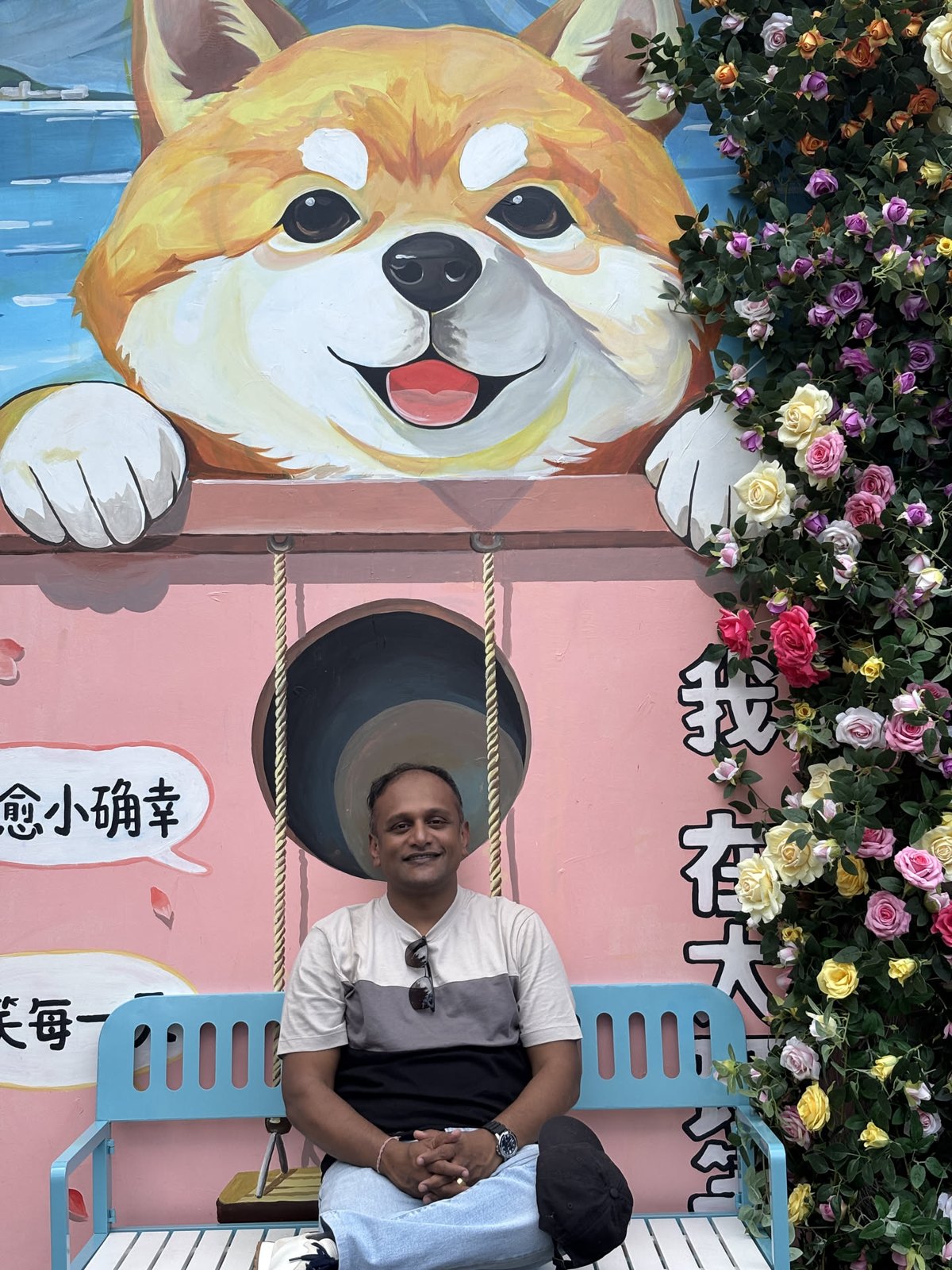
Somewhere between the courtyards and the river-crossed lanes, we slowed down and simply walked together, the way we’ve been doing for ten years, with nothing to get done and nowhere to be late.
We kept almost too many pictures of these lanes. One, though — the roofs against the mountains, the very last of the day’s light in the air — I’d keep even if I had to choose only one from the whole town.
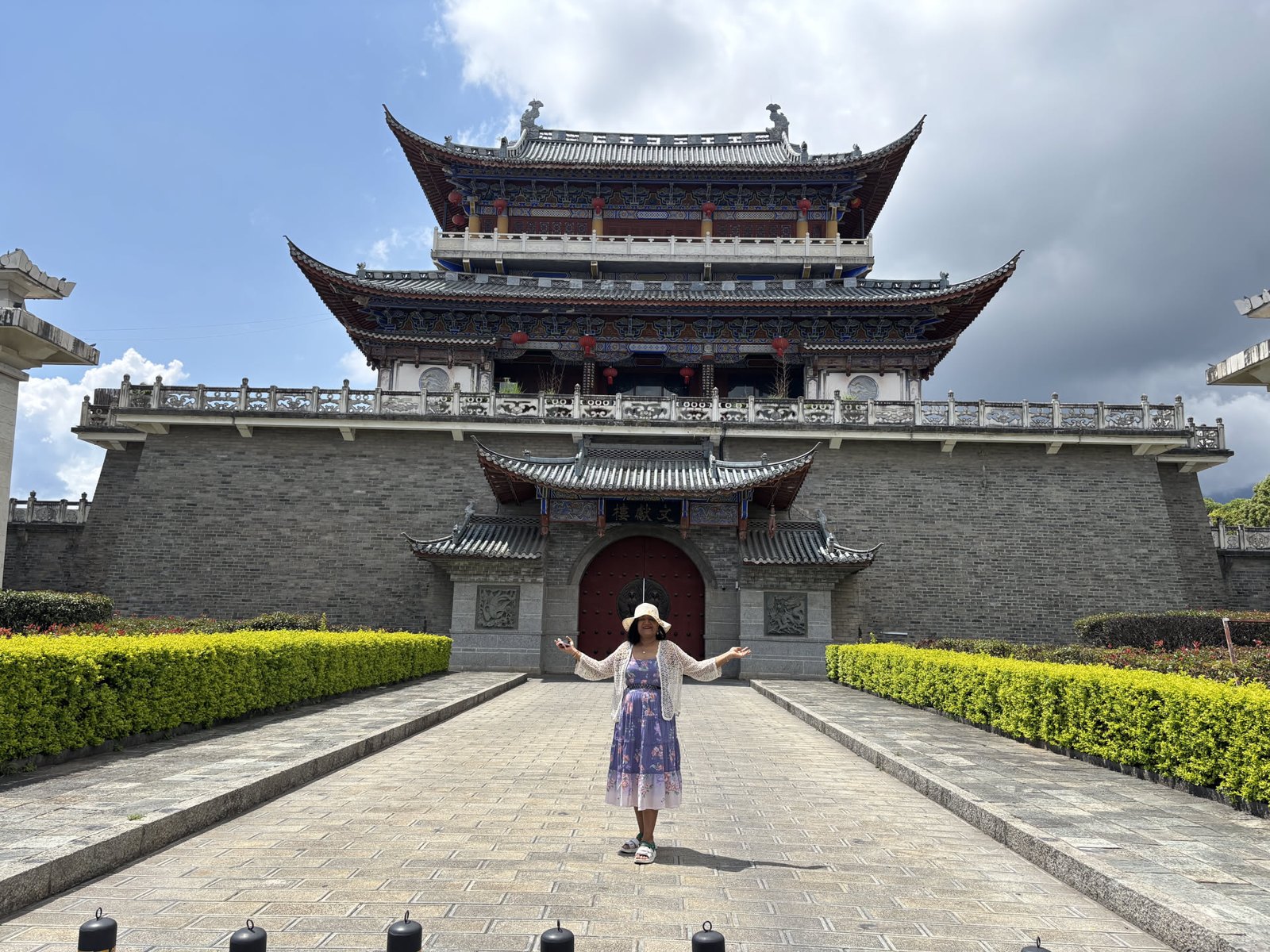
Saying goodbye to Dali
All good mornings end, and so did ours in Dali. We walked back to the station for the train that would carry this anniversary on to its next chapter.

Standing on the platform, it occurred to me that we had come to Dali by train and were leaving it by train — the whole of it, a lake, three pagodas, a thousand-year-old town and ten years of us, sitting between a departure and an arrival. It was the sort of goodbye I was happy to have: a ticket in my hand, a window seat waiting, and another beautiful place already promised just up the line.
And so, Dali, we let you go. On to Lijiang — still holding hands, as always.